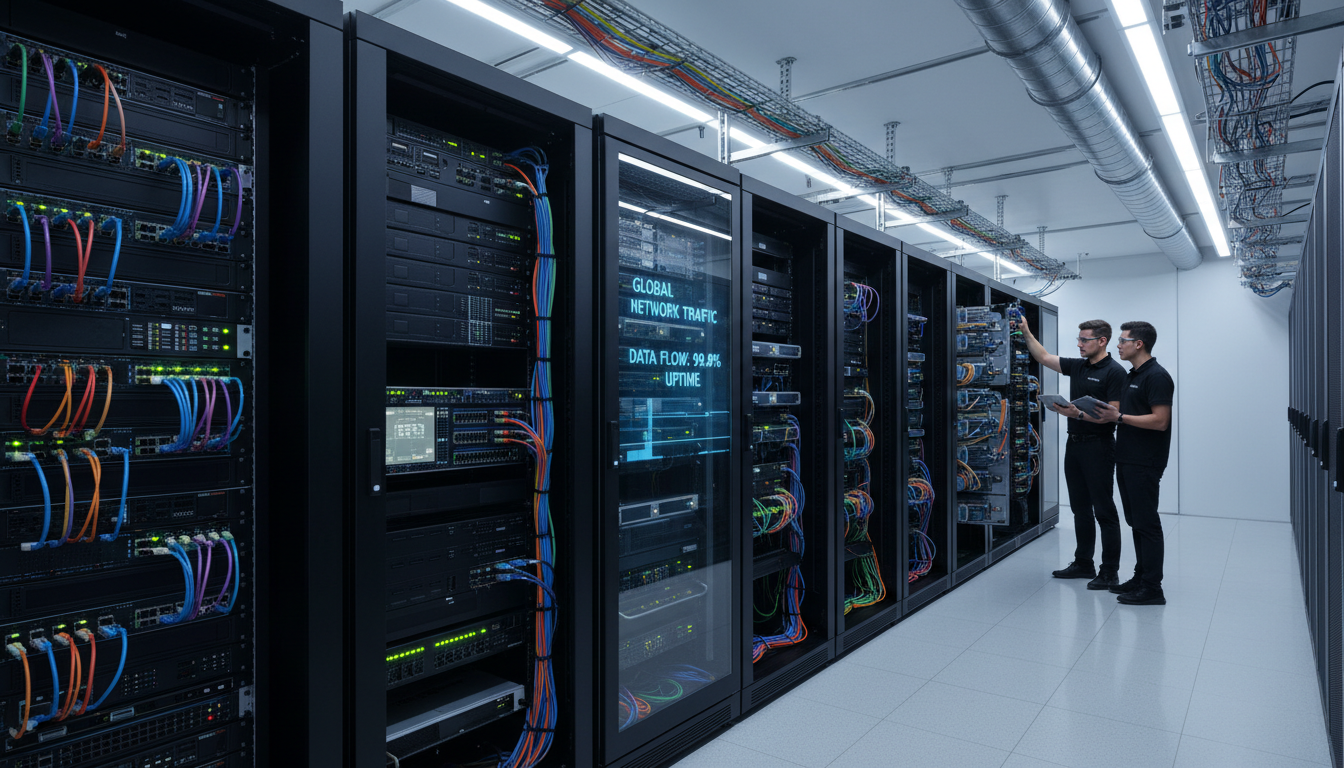
Reliable connectivity is not a luxury anymore. It is the difference between a business that runs smoothly and one that loses money every time the network drops. This guide explains what telecommunications network engineering actually involves, in plain terms, and why getting the infrastructure right matters far more than most business owners realize.
For a business, resilience comes down to what is underneath everything else. When outages, slowdowns, and scaling problems keep coming back, they are rarely just minor glitches. More often, they point to a network that was pieced together over time instead of designed from the start. At MAF Engineering, we treat connectivity as infrastructure, not as a commodity. This guide is a practical introduction to telecommunications network engineering for business leaders: what the field covers, why it differs from everyday IT, and how professional design and planning protect a company's long-term performance.
Defining Telecommunications Network Engineering in the Modern Age

Telecommunications network engineering is the specialized work of designing, building, and managing the systems that carry data across distances. Where everyday IT support focuses on the computers and software in front of a user, this discipline addresses the whole architecture of connectivity. For a firm like MAF ENGINEERING, that means everything from laying physical infrastructure such as fiber optics and microwave links, to configuring the rules that decide how data moves across a region or around the world.
This often leads to a common question: is a telecom engineer just doing an IT job? There is some overlap, especially as networks become more software-defined, but the real difference comes down to scale and environment. Telecommunications engineers work on larger infrastructure and the physical plant itself. They handle the reality of signals weakening over distance, the logistics of attaching lines to utility poles, and the design of high-capacity backbones that serve entire communities or large corporate campuses.
Providing comprehensive telecommunications and network engineering services requires a deep understanding of both the physical world and the digital layer. It is a marriage of civil engineering precision with advanced computer science. When we design a network, we are not just connecting devices; we are building a resilient, scalable highway for information that must withstand environmental stressors and stringent regulatory requirements. This holistic approach ensures that the foundation of a business's communication remains stable and efficient as the demand for bandwidth continues to grow.
The Core Components of a Telecommunications System
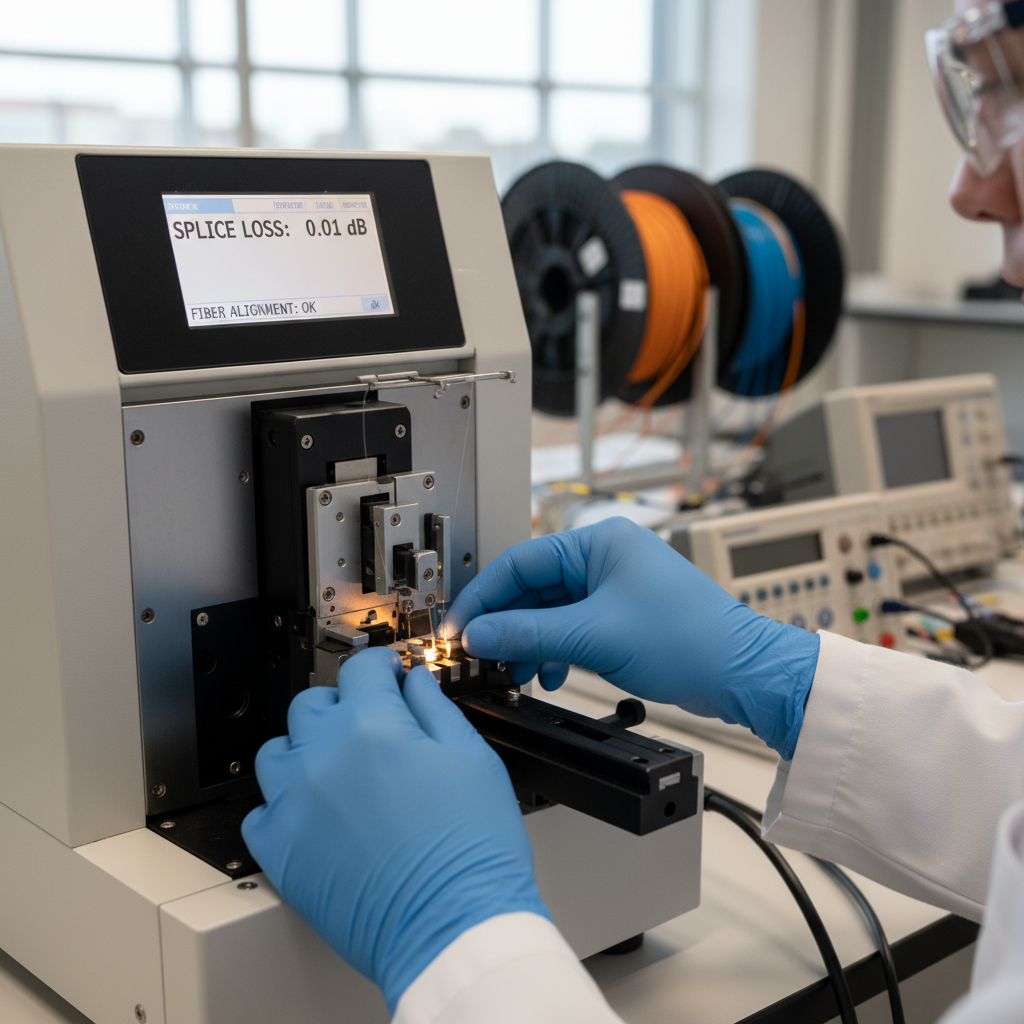
At its most basic level, any communication system has three parts: something that sends a signal, something that carries it, and something that receives it. In practice, engineering these pieces means drawing a clear line between what lives outside a building, known as Outside Plant, and what lives inside a facility, known as Inside Plant.
Outside Plant engineering covers the physical infrastructure between a central office or data center and the end user: aerial fiber on utility poles, underground conduit, and the rugged enclosures that keep sensitive hardware protected from the weather. Inside Plant engineering focuses on the architecture within a facility, such as equipment racks, structured cabling, and power systems. Both matter equally, because a failure in either one means the entire connection goes down.
The engineering requirements vary significantly between wired and wireless connections. Wired systems, which use fiber optics or copper, need precise physical route planning so the signal stays strong along its entire path. Wireless systems, such as cellular, microwave backhaul, and satellite, rely on radio frequency signals and need careful analysis of line-of-sight, terrain, and weather to stay reliable.
Managing this traffic is the active equipment at the heart of the network. Devices that combine multiple signals into a single high capacity stream let one fiber strand carry far more than it could on its own. At the other end, routers and switches deliver each signal where it needs to go. When these parts are integrated precisely, the physical and digital layers of a network work together as one dependable system.
Telecom vs Network Engineer: Understanding the Differences
The difference between a telecommunications engineer and a network engineer comes up often, and the distinction matters for infrastructure planning. Telecommunications engineering is generally concerned with the physical transport: the long-haul fiber, microwave links, and outside plant that actually move data across distance. These engineers focus on how signals travel and what hardware is needed to carry them.
Network engineering, by comparison, focuses on the local network and the rules within those connections: routing, firewalls, and software-defined configuration, all so data reaches the right place within a building or campus. The network engineer fine-tunes where traffic flows; the telecom engineer makes sure the physical path exists to carry it in the first place.
MAF ENGINEERING bridges these two disciplines to provide comprehensive telecommunications and network engineering services. By treating the physical infrastructure and the logical network as a single, integrated system, we eliminate the common disconnect between hardware deployment and software performance. This unified approach is a central pillar of our introduction to telecommunications network engineering philosophy; it ensures that a robust physical plant is perfectly aligned with the technical requirements of the digital protocols it carries.
Why Your Business Should Care About Professional Engineering Services
Professional engineering is not just another cost. It is how you avoid the far larger cost of patching a poorly designed network for years. Weak designs tend to produce the same problems over and over: slow connections, unexpected downtime, and systems that choke as data needs grow. For business leaders, this is the practical takeaway of any introduction to telecommunications network engineering: pay attention to the foundation before it becomes the bottleneck.
Professional engineering services focus on three critical pillars to ensure network longevity:
Scalability: We design systems with the future in mind. This involves calculating capacity requirements for the next decade, ensuring that current fiber installations and hardware can support the transition to 5G small cells and high-density throughput without requiring a complete rip-and-replace of the physical plant.
Reliability: By conducting rigorous link budget analyses and signal-to-noise ratio assessments, we minimize packet loss and signal degradation. This engineering precision ensures that voice, video, and data remain stable even during peak usage periods.
Security: A professional approach hardens both the logical and physical layers. This includes designing secure OSP enclosures that prevent unauthorized physical access and configuring robust logical protocols that protect data as it moves through the transport layer.
Furthermore, businesses in Rhode Island and the broader New England region must navigate a complex landscape of state and local regulations. Professional engineering ensures that every installation, from utility pole attachments to underground trenching, complies with the National Electrical Safety Code (NESC) and specific Rhode Island Department of Transportation (RIDOT) requirements. This compliance prevents costly fines and legal delays that often plague uncertified projects.
By leveraging comprehensive telecommunications and network engineering services, businesses can transform their connectivity from a potential bottleneck into a competitive advantage. To see how these principles are applied in real-world scenarios, you can view the MAF ENGINEERING portfolio or contact our engineering team to discuss the specific technical requirements of your upcoming infrastructure project.
The Strategic Role of Site Surveys and Blueprints

Before any cable is pulled or any antenna mounted, the work starts with careful field data. A site survey is a methodical look at the physical constraints and conditions of a location. At a communications tower, that means checking the structure, the grounding, and the available equipment space. Those findings become detailed network diagrams, which serve as the blueprint for the entire project.
Precision in these early stages prevents the construction errors that often derail budgets. An incorrect measurement of conduit size or a misunderstood utility pole height can stall a fiber deployment for weeks while new permits are secured. By producing exact technical drawings, we give field crews a clear roadmap that removes guesswork, and we validate each build against those drawings before it is handed off.
This level of detail is central to professional telecommunications network engineering, because it is what lets a plan move from drawing to working hardware without surprises. To see how these standards are applied, explore the MAF ENGINEERING portfolio.
Future Trends in Connectivity: Fiber Expansion and 5G Infrastructure

The Northeast is currently witnessing an unprecedented expansion of fiber optic networks, largely driven by the deployment of 5G small cell infrastructure. Unlike previous cellular generations that relied on massive macro towers, 5G requires a high density of nodes placed every few hundred feet. This shift significantly complicates the engineering landscape, as each node demands dedicated fiber backhaul and reliable power sources at the street level. Navigating the spatial constraints of Rhode Island’s urban corridors requires sophisticated OSP design to avoid utility congestion while meeting the stringent latency requirements of 5G technology.
This evolution represents a significant milestone in any introduction to telecommunications network engineering, as the focus shifts from broad coverage to hyper-local capacity. MAF ENGINEERING remains at the forefront of these localized infrastructure projects, providing comprehensive telecommunications and network engineering services that address the complexities of modern power and backhaul density. Our team manages the technical requirements of these high-capacity deployments, ensuring that new fiber routes are optimized for future throughput needs. To see how we support New England’s digital growth, view the MAF ENGINEERING portfolio or contact our engineering team for a detailed technical consultation.